Made in Brisbane, Mount Ommaney, Australia
About Aussie Stitch Co.
We make tough, well-stitched leather sheaths designed to fit your pickaxe properly.
Important – how sizing works
The size lasered on the sheath (for example 105 x 290 mm) is not the size of the sheath itself.
It is the size of the pickaxe the sheath is made to fit.
To check if a sheath will fit your pickaxe:
Measure the length of your pickaxe head.
Measure the width of your pickaxe blade.
Match those measurements to the size marked on the order.
If your pickaxe is roughly 105 mm wide by 290 mm long, order the sheath marked 105 x 290 etc.
That’s it. Measure your pickaxe, not the sheath, and it’ll fit.
Why we make them
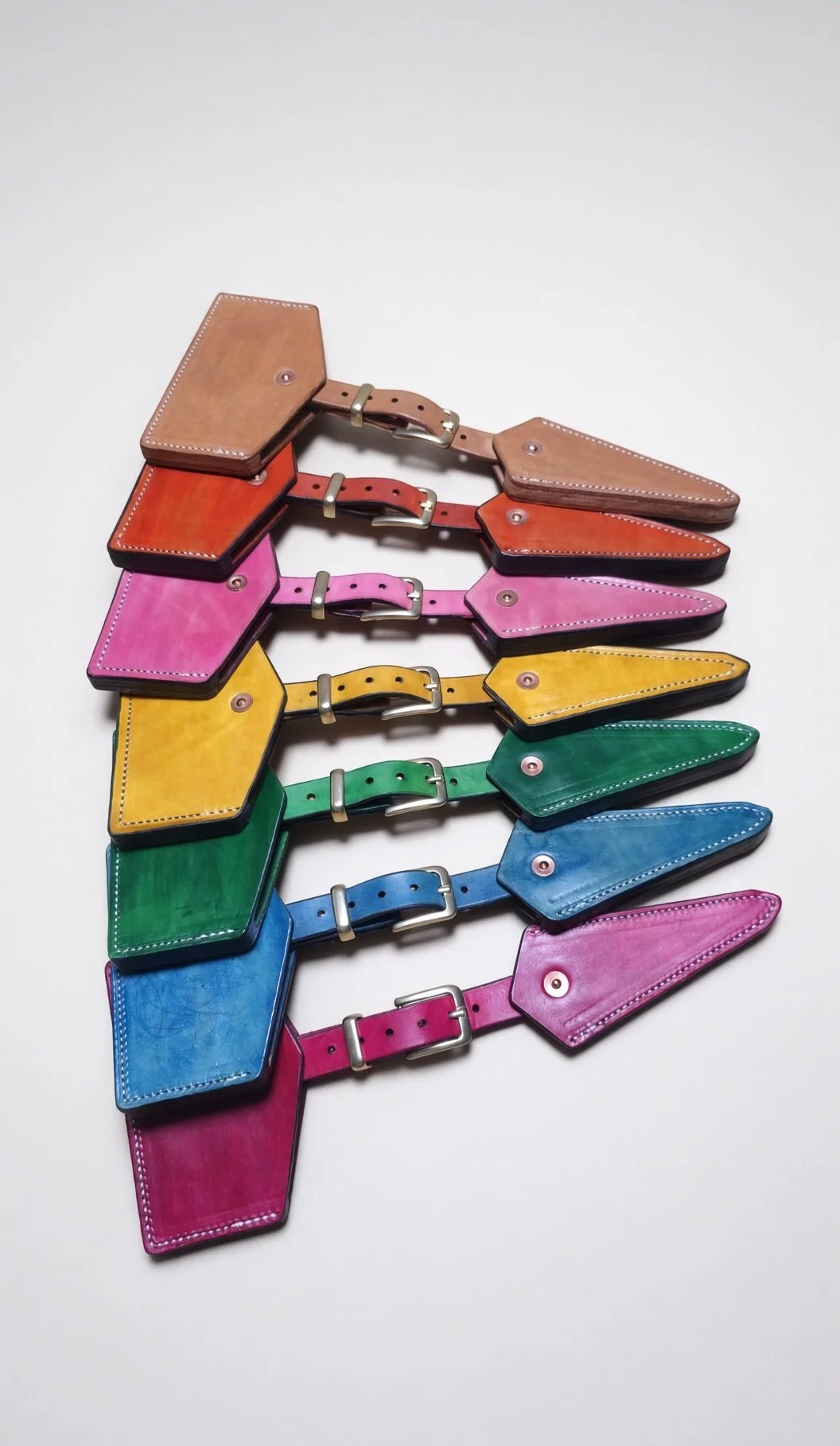
We started making these sheaths because no one was producing proper protective covers for pickaxes — especially tough, durable ones in real veg-tan leather.
The idea came from old World War II pickaxes that had leather covers. They looked good, added real personality to the tool, and actually served a purpose.
Each one is purpose-made for the different pickaxe sizes so it actually fits properly. The leather adds a bit of character, but more importantly it does a job:
Stops the pickaxe scratching your seats or tray while you’re travelling
Makes it easy to spot among the rest of your gear thanks to the different colours
Protects your hand when you grab it — the sheath stays on until you’re ready to use it
Simple, tough, and made so your pickaxe travels better and is safer to handle.
Why the price
Each sheath costs roughly $35 in materials alone — quality leather, a purpose-made brass buckle and keeper for 3 mm thick straps, four copper rivets, plus dye, glue, and the fuel to collect everything.
From there it’s a full handmade process: laser cutting and engraving, edge sanding, cleaning, oiling with Neatsfoot oil, dyeing, gluing, fitting the hardware, more edge work, final gluing and sanding, black edge paint, sewing (14mm thick leather), and a final acrylic sealer. One sheath takes one to two hours to make properly.
The price reflects good materials, the right tools, and the time it takes to build something that actually lasts and fits the way it should.
Not to mention the design work and the clean stitching that goes into every one.